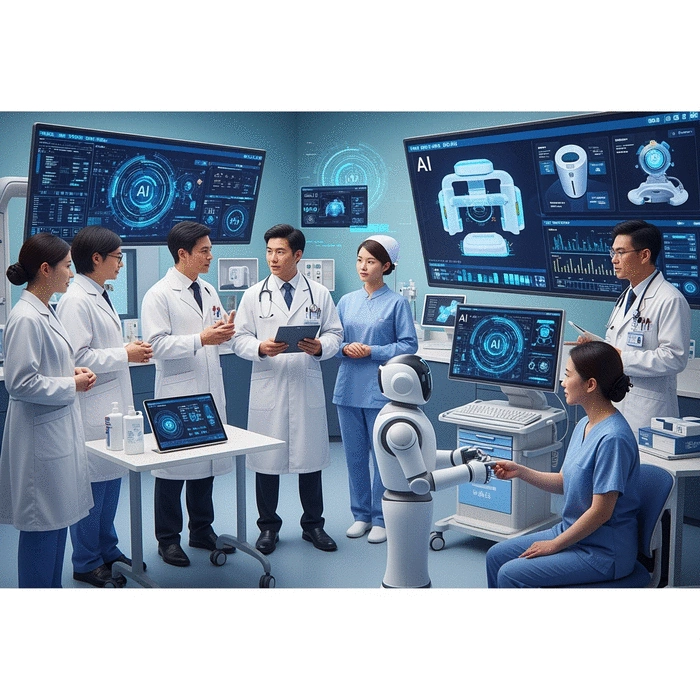
Addressing Medical Resource Challenges
Efficiency: AI-driven scheduling & predictive analytics.
Access: Telemedicine solutions expand reach.
Monitoring: AI-assisted wearables for real-time health metrics. Personalization: Customized care for chronic disease management. Prediction: Identify disease outbreaks via predictive modeling. Targeting: Patient stratification for interventions. Privacy: Data anonymization & encryption for patient confidentiality. Frameworks: Clear guidelines for AI development, testing, & surveillance. AI Ethics: Principles and Challenges. The pressure on medical resources in China is intensifying, particularly in urban areas where populations are dense. AI innovations are proving to be vital in addressing these challenges by streamlining processes and optimizing resource distribution. For instance, AI algorithms can predict patient inflow, helping hospitals prepare for surges in demand. These innovations not only enhance operational efficiency but also improve patient access to care, ensuring that resources are allocated where they are needed most. China's aging population is a significant factor reshaping the healthcare landscape. With the number of elderly citizens increasing, the demand for healthcare services is rising sharply. AI plays a crucial role in meeting these demands by supporting personalized care and efficient monitoring of chronic conditions. Technologies like AI-assisted wearable devices enable continuous health monitoring, allowing for proactive intervention. This is essential as the healthcare system manages not just the volume of patients, but also the complexity of their needs. By embracing AI, healthcare providers can better accommodate the unique needs of an aging population, ultimately fostering healthier communities. This strategic approach aligns with broader discussions on Chinese AI and Cultural Change, highlighting how technology adapts to societal shifts. Health data analytics is transforming the way we understand and address public health issues. In China, AI is leading the charge by enabling more precise data analysis and insights. This shift allows healthcare professionals to make informed decisions based on real-time data. AI tools are helping to identify patterns and trends in patient data, which can inform everything from public health strategies to individual treatment plans. Here’s how: As we continue to explore AI’s contributions to healthcare, it’s clear that enhanced data analytics will be pivotal in shaping the future of medicine in China. As AI continues to reshape the healthcare landscape, we want to know your thoughts. What do you believe is the most significant benefit of AI in healthcare? Share your insights below: As we dive deeper into the world of AI in healthcare, we must address the ethical and regulatory challenges that accompany these advancements. These challenges are critical, as they can greatly influence patient trust and the effectiveness of AI technologies. It's essential to navigate these waters carefully to ensure that innovations align with societal values and ethical standards. One major aspect is the concern over patient privacy. With AI applications analyzing vast amounts of health data, maintaining confidentiality is paramount. How can we ensure that sensitive information remains protected while still leveraging the potential of AI? This question is at the forefront of discussions among healthcare professionals, ethicists, and technologists alike. In the age of digital information, patient privacy concerns have grown significantly. As AI systems become more integrated into healthcare practices, the volumes of data processed increase dramatically. Here are a few key points regarding these privacy concerns: To counter these challenges, there are emerging solutions, such as data anonymization techniques and robust encryption methods that safeguard sensitive information without sacrificing data utility. The rapid pace of AI innovation in healthcare necessitates the establishment of comprehensive regulatory frameworks. These frameworks are essential for ensuring that AI medical devices operate safely and effectively. Here’s what they typically include: By adhering to these regulations, we can foster a safer environment for both patients and healthcare providers. It’s an ongoing effort, but one that is crucial for building trust in AI-driven healthcare solutions. The ethical considerations surrounding AI in healthcare are multifaceted. At Zhenmind AI, I often reflect on the importance of aligning technological advancements with ethical standards. Here are some key ethical challenges we face: To navigate these challenges, it’s vital to engage in open dialogues between technologists, healthcare providers, and ethicists. We need collaborative frameworks that prioritize not just innovation, but also the welfare of patients. As we explore these solutions, I invite you, our readers, to consider your roles in fostering ethical AI practices in your own fields. For specific considerations within China, you might find our article on AI Ethics in Chinese Healthcare particularly relevant. As we look at the broader landscape of AI healthcare innovations, it's insightful to draw comparisons between China and other leading nations. What can we learn from each other's approaches? Here, we’ll explore lessons from other countries and pinpoint unique strengths of China’s healthcare sector. Here is a quick recap of the important points discussed in the article:Impact of Aging Population
Enhancing Health Data Analytics
Ethical and Regulatory Challenges

Addressing Medical Resource Challenges with AI Innovation
The Impact of an Aging Population on Healthcare Demands

The Role of AI in Enhancing Health Data Analytics Across China
We Want to Hear From You!
Ethical and Regulatory Challenges in AI Healthcare Implementation
Patient Privacy Concerns in AI Applications
Regulatory Frameworks: Ensuring Safe AI Medical Devices
AI Ethics in Healthcare: Navigating Challenges and Solutions
Comparative Analysis: China's AI Healthcare Innovations vs. Global Trends
Frequently Asked Questions (FAQs)
Recap of Key Points
 As the global economy evolves, the role of AI in driving innovation cannot be overstated. Chinese AI
 What if the next revolutionary leap in technology was not just about software, but about machines th
 In the rapidly evolving landscape of artificial intelligence, understanding our role in shaping its
Recent Posts